Zati for compliance consultancies
Turn a public rule and a redacted policy into a cited gap matrix
Independent compliance consultancies are paid to answer a narrow question: does this rule change what this client's policy must say, and where exactly is the gap? Much of that work is preparation — assembling the right versions, comparing the right passages, writing down what is missing. A smaller part is judgment: deciding whether a difference is a genuine gap or an interpretation only a qualified practitioner should settle. Zati gives you a workspace where a team of AI workers with named responsibilities can take on that preparation, with inspectable outputs and one clear point where your professional decides.
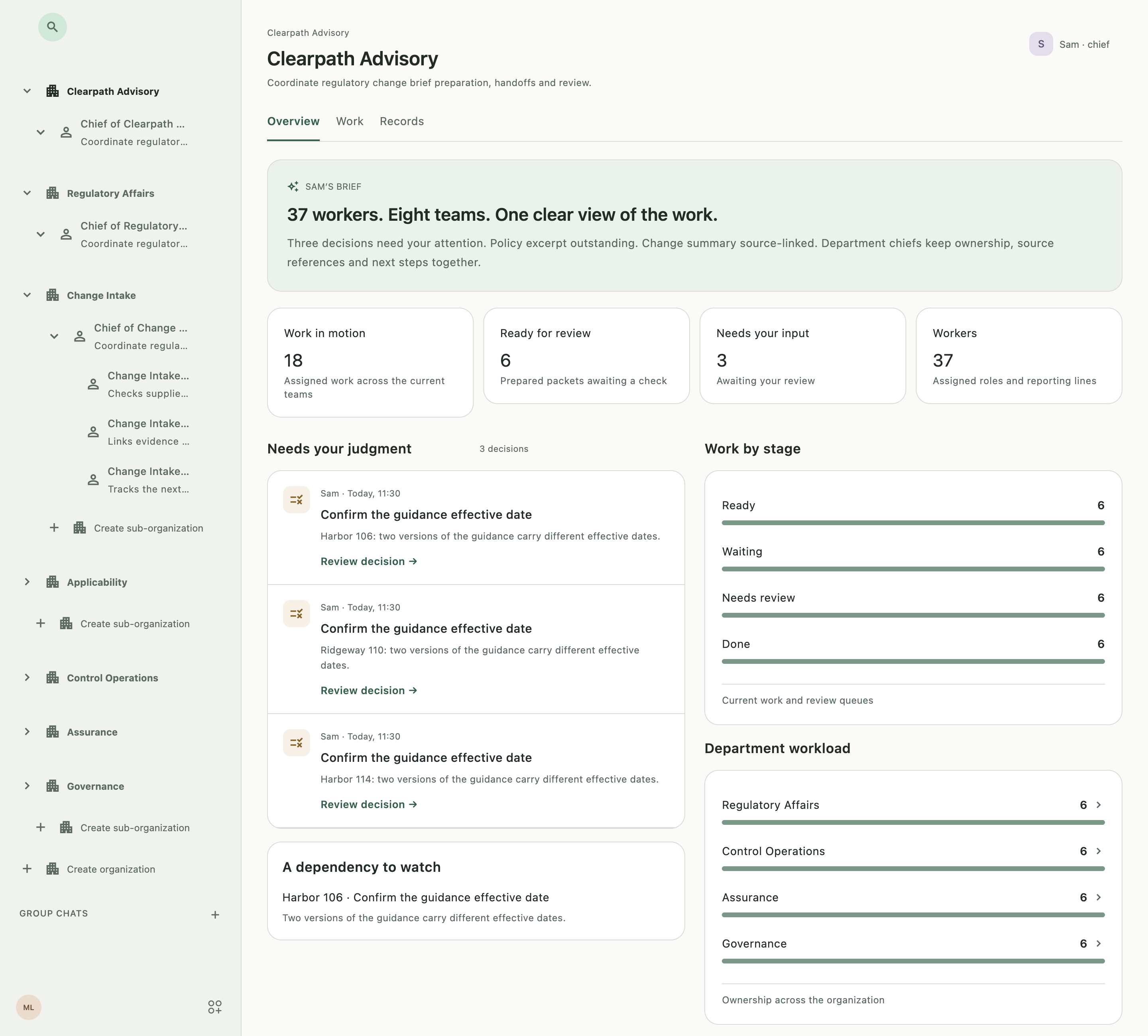
Start with one recurring deliverable
Most practices already deliver something like a gap matrix repeatedly: a public rule or guidance version, a client-redacted policy, and your own comparison instructions. That is a good first responsibility, because the inputs are known, the output is recognizable, and the review criteria are already in your head.
Write the assignment before you assign it. State the inputs, the expected output, and the acceptance criteria a reviewer will apply.
Name the workers and what they hand back
- A change-research worker takes the supplied public rule and guidance versions and prepares a cited change brief: the passages compared, the effective date on each, and the questions that need expert interpretation.
- A policy-comparison worker takes the rule, the redacted policy and your instructions and prepares the gap matrix. Each proposed gap points to the text on both sides and separates missing material from an unresolved interpretation.
- A reviewing worker checks the matrix against your brief and flags any claim that cannot be traced to a supplied passage.
- Your decision: accept the draft, return it with a specific correction, or settle the interpretation yourself before anything reaches the client.
That is a concrete starting configuration — named responsibilities, inspectable work, one human decision point.
Inspect the work, not just the summary
Ask of every output: what was examined, what remains uncertain, and which decision would let the work proceed. The designated professional approves conclusions and client delivery.
Keep engagements separate
Persistent worker identities, separate conversations, and tasks, files and reviews in one organizational workspace. Give each worker a remit, selected sources and resource limits, and keep client-specific material inside its authorized scope. Your research subscriptions and policy repositories continue to own their records and rules; begin with approved material your team supplies, and treat connected use as something to assess against supported capabilities and permission.
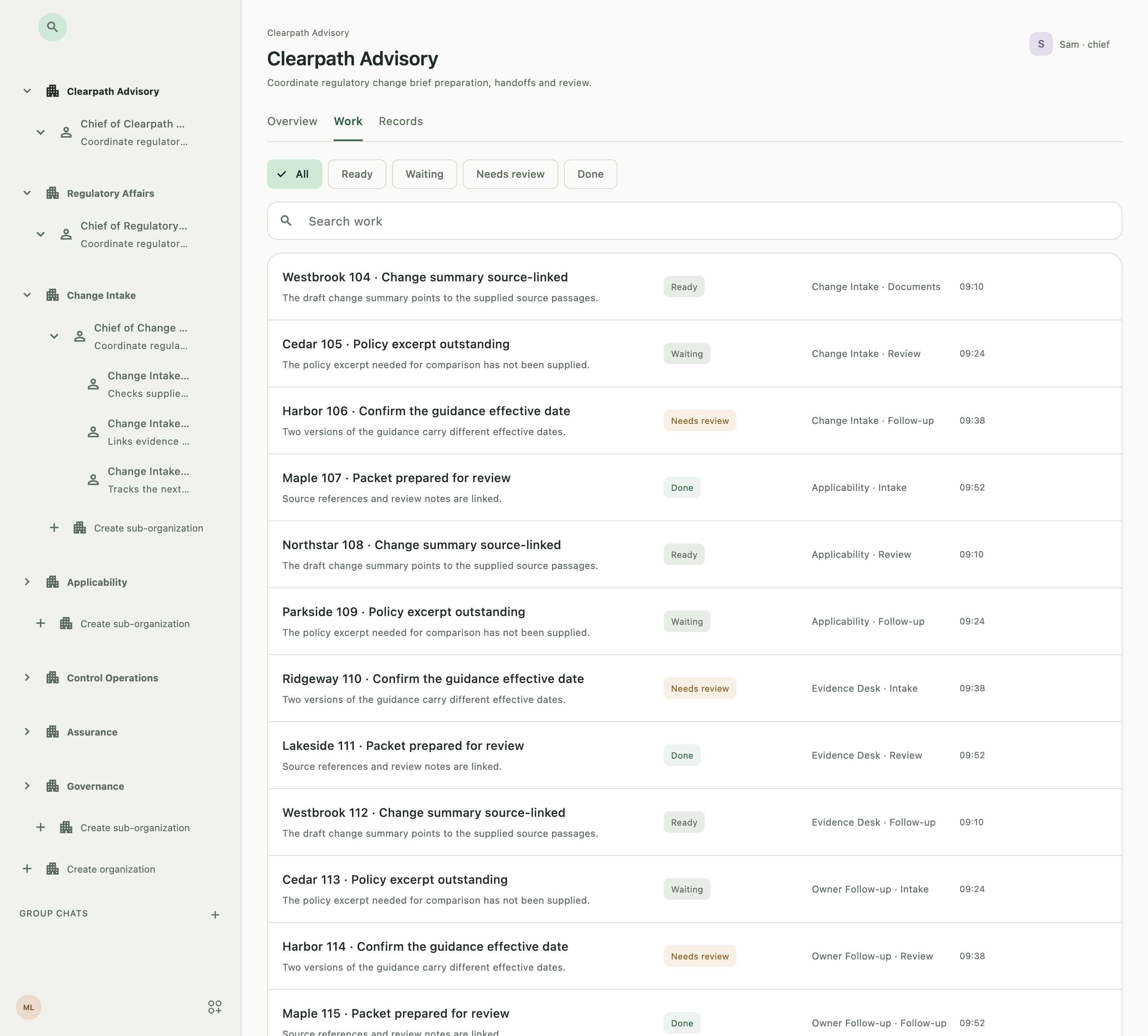
Grow from one responsibility to a practice team
Once the gap matrix is reliable, add an engagement-coordination worker that prepares a review queue from the agreed work plan, supplied status notes and reviewer comments — naming missing inputs, proposed follow-up owners and draft internal handoff notes. A chief can hold the coordination role while specialists stay focused on their own method.
Questions before you start
Do I need to connect our research subscriptions?
Begin with approved material your team supplies. Connected use depends on supported capabilities and permission, which we assess against your setup.
Who decides whether a difference is a real gap?
Your practitioner. Workers prepare, cite and flag; the professional interprets and approves.
What should I bring to the call?
One recurring deliverable, an example of its inputs, and the result you want it to produce.
Choose the first deliverable to hand over
Bring the responsibility you keep carrying. We will map the workers, the review step and the decision that stays with you.